Source Cards
The Covenant and Self-Government at Plymouth, Verified Claim by Claim
Honesty in history is not pretending everything is settled. It is stating plainly how much we know and on what evidence. Each card below makes a single factual claim, tags it, and names its source.
Three-State Honesty Tags
- ✅ VERIFIED — At least two independent, reliable sources agree.
- ⚠️ DISPUTED — Sources or scholars disagree; we present the tracks and do not adjudicate.
- ❓ UNAUDITABLE — Single-source or thin primary evidence; not to be treated as hard fact.
I. Mayflower II and the 1957 Crossing
An Englishman's thank-you
✅ VERIFIED Mayflower II was the idea of British journalist Warwick Charlton (1918–2002), who had served under Montgomery in WWII and, moved by America's wartime support, resolved after reading William Bradford's history to give America "a piece of their own history." Sources: Randal Charlton, "Voyaging through History," University of Exeter (2020); Foundation for Economic Education, "Remembering Warwick Charlton"; Plymouth Independent.
A reconstruction, not a replica
✅ VERIFIED No plans or images of the original Mayflower survive, so Baker's work was a scholarly reconstruction from period English merchant-ship types, not a replica of a known vessel. Sources: Plimoth Patuxet Museums; Wikipedia, Mayflower II; Mystic Seaport Museum, "Mayflower II: Big Timber Work."
Built by hand at Brixham
✅ VERIFIED The ship was built at the J.W. & A. Upham Shipyard in Brixham, Devon, under master shipbuilder Stuart Upham; keel laid 27 July 1955, launched 22 September 1956, using English oak, hand-forged nails, hand-sewn linen sails, hemp cordage and Stockholm tar. Sources: Plimoth Patuxet Museums; Wikipedia, Mayflower II; Mystic Seaport Museum.
"Built entirely by hand" needs a caveat
⚠️ DISPUTED The claim that no power tools were used is inaccurate: rough stock was cut with power tools while the final fitting, joining and shaping were done by hand. Sources: Mystic Seaport Museum restoration accounts; Plimoth Patuxet Museums (tour framing).
The 1957 crossing: Captain Villiers and 33 crew
✅ VERIFIED Mayflower II sailed from Plymouth, Devon on 20 April 1957 under Captain Alan Villiers (1903–1982), a celebrated square-rig mariner, with a crew of 33. Sources: Plimoth Patuxet Museums; Wikipedia, Mayflower II & Alan Villiers.
A 300-year-old diary saved the 1957 crew
✅ VERIFIED Caught in a storm with no one alive experienced in handling a 17th-century vessel, Villiers recalled Bradford's account of the original ship riding out storms by striking all sail and drifting beam-on ("to hull," today called lying ahull); he did the same, and the ship came through. Sources: Plimoth Patuxet Museums, Mayflower II page; William Bradford, Of Plymouth Plantation (public teaching editions).
Arrival on 13 June 1957, 25,000 on shore
✅ VERIFIED Mayflower II made landfall at Provincetown on 12 June and arrived under sail at Plymouth, Massachusetts on 13 June 1957 to a crowd of about 25,000; the ~55-day crossing beat the original's ~66–67 days by roughly two weeks. Sources: Plimoth Patuxet Museums; Wikipedia, Mayflower II; Internet Archive newsreel XD6010 (1957).
The nominal sum of one dollar
✅ VERIFIED In September 1957 Charlton transferred the ship for a nominal one dollar — a gift, with the price present only so the contract had legal consideration; by his son's account it cost him dearly in finances, career and reputation for years. Sources: Randal Charlton, University of Exeter (2020); Foundation for Economic Education.
The restoration: ~$11.2M, ~70% renewed
⚠️ DISPUTED The restoration at Mystic Seaport cost about $11 million (four sources give $11.2M; the circulated $11.9M has none) and replaced roughly 70% of the ship's timbers (the museum's figure; one AP source says 75%), with all hull planking renewed in 20,000 board feet of Danish white oak. Sources: AP/Boston.com (2020); Boston Globe (2020); WoodenBoat, "Mayflower II's Rebirth"; Plimoth Patuxet NRHP press release.
Added to the National Register of Historic Places
✅ VERIFIED Mayflower II was listed on the National Register of Historic Places on 22 October 2020 (NPS ref. SG100005762), cited for its link to the nation's founding story, its full-scale embodiment of a 17th-century English merchant ship, and for launching the reproduction-vessel trend. Sources: National Park Service (NRHP ref. SG100005762); Plimoth Patuxet Museums, Mayflower II page.
A working vessel, not a model
 Public domain
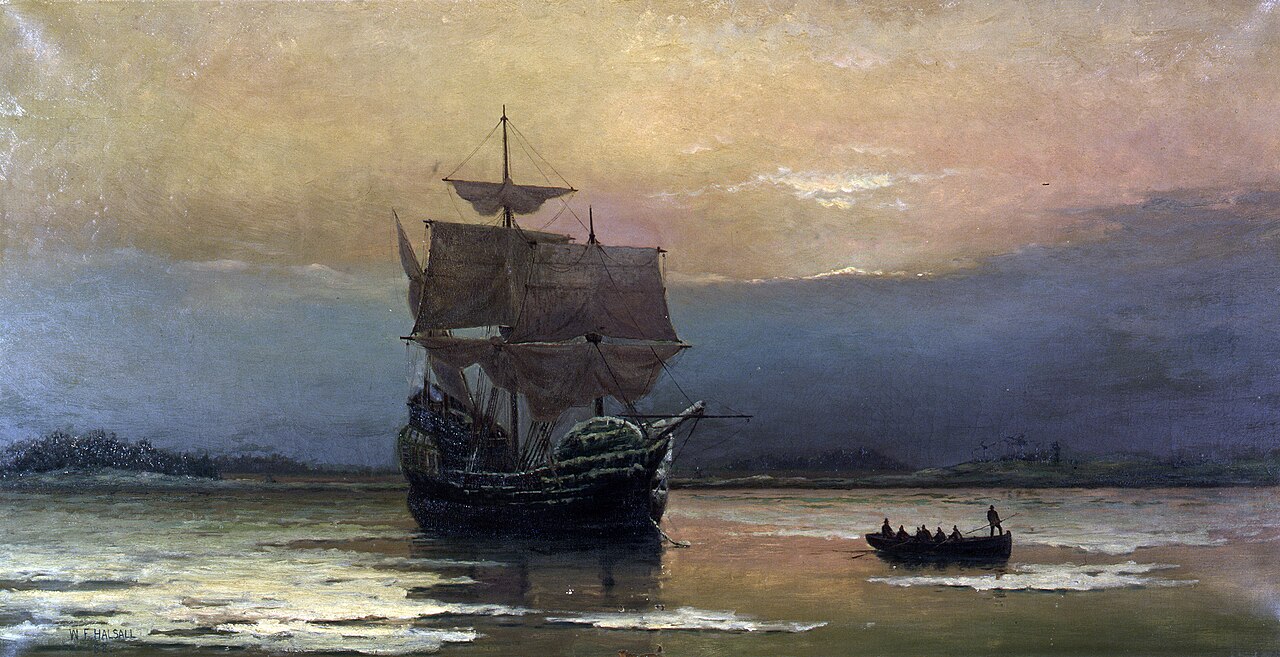
✅ VERIFIED The museum calls Mayflower II a "working vessel" and a "floating classroom" — a ship that truly sails; being square-rigged (good downwind, poor upwind) explains both the original's ~66-day crossing of 1620 and why, reaching Cape Cod, she could not simply turn south to the intended Hudson River. Sources: Plimoth Patuxet Museums, Mayflower II page; Wikipedia, Mayflower II.
II. Landfall, the Mayflower Compact, and the First Winter
Life on the 'tween deck
✅ VERIFIED Passengers lived for the voyage on the gun deck below the main deck — the "'tween deck" — with no windows, headroom of about five feet, no latrines and no private rooms. Sources: MayflowerHistory.com (Caleb Johnson); Plimoth Patuxet Museums student resources; Naval History Magazine (USNI, 2021).
The shallop, carried in pieces
✅ VERIFIED A 30-foot shallop was carried knocked-down among the passengers and reassembled over weeks after arrival; it was this boat that scouted the coast and chose the Plymouth site. Sources: MayflowerHistory.com, "Cross-Section"; Plimoth Patuxet Museums.
About 102 passengers, ~66 days at sea
⚠️ DISPUTED The museum gives 102 passengers over ~66 days; other sources say 101/65/67 because they count to different endpoints and because one passenger died and one was born at sea, so the head-count shifts by the moment. Sources: Plimoth Patuxet Museums student resources; Wikipedia, Mayflower Compact; MayflowerHistory.com.
Signing the Compact
✅ VERIFIED The Mayflower Compact was signed aboard ship at anchor in Provincetown Harbor on 11 November 1620 (Old Style) = 21 November 1620 (New Style), by 41 adult male passengers. Sources: Pilgrim Hall Museum, "The Mayflower Compact"; Plimoth Patuxet Museums; Wikipedia, Mayflower Compact.
The heart of the Compact
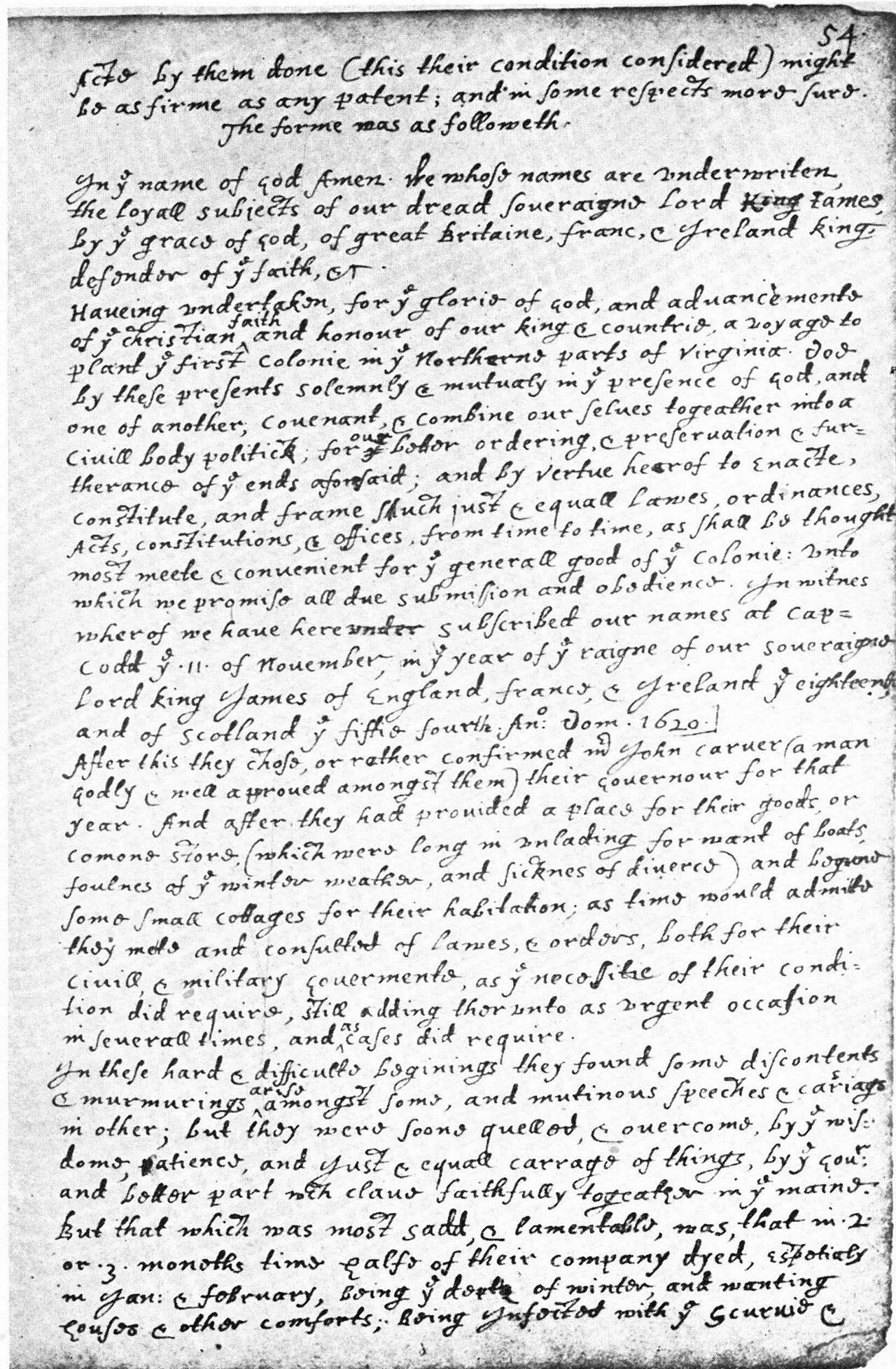
✅ VERIFIED At its core the signers "in the presence of God, and one of another, covenant and combine our selves together into a civil body politic," promising "all due submission and obedience" — self-government defined as making laws and then obeying the laws one made. Sources: Pilgrim Hall Museum (transcription); General Society of Mayflower Descendants; University of Chicago, The Founders' Constitution.
The original is lost — so where do the names come from?
 Public domain
⚠️ DISPUTED The original document is lost; the text survives in Mourt's Relation (1622) and Bradford's manuscript, but the full list of 41 signers comes solely from Nathaniel Morton's New England's Memorial (1669). Track A: Morton was the colony's secretary with archive access, and scholars generally accept the list. Track B: it is a single, uncorroborated source published 49 years later by an interested descendant. Sources: Pilgrim Hall Museum; Wikipedia, Mayflower Compact; General Society of Mayflower Descendants.
Why write the Compact at all?
⚠️ DISPUTED Track A (legal-vacuum, the museum's line): their patent covered only "the northern parts of Virginia," Cape Cod lay outside it, and while awaiting a new patent they needed to maintain order and form a civil society. Track B (internal-threat, traditional): non-Puritan "Strangers" aboard threatened that no one would command them once ashore, and the Compact was rushed to quell near-mutiny (Bradford himself noted "mutinous speeches"). Sources: Plimoth Patuxet Museums; Britannica, Mayflower Compact; William Bradford, Of Plymouth Plantation.
"The birthplace of American democracy"?
⚠️ DISPUTED Track A (foundational): one of the earliest self-government documents in the Americas, an early practice of "government by consent," seen as a source of the Declaration and Constitution. Track B (revisionist): it is not a constitution — about 200 words, prescribing no structure — but a transplant of the congregational church covenant into a civil setting; a temporary document that settled no lawful claim to land that was Wampanoag/Patuxet, and its link to "the birth of democracy" is largely a 19th–20th-century national myth. Sources: Plimoth Patuxet Museums (quoting naval historian Henry Culver); General Society of Mayflower Descendants; North Dakota Law Review 95:1; Teach Democracy.
Plymouth Rock: most famous, least evidenced
✅ VERIFIED No contemporary Pilgrim writing mentions any landing rock; the earliest known reference is a boundary marker — "a great rock" — in a 1715/16 town record. Only in 1741 did the ~94-year-old elder Thomas Faunce (born 1647, not a witness) identify it, from oral tradition, as the landing place, 121 years after the fact; the "1620" on its face was carved only in 1880. Pilgrim Hall Museum's own conclusion is that the dispute can never be settled — the most famous stone lacks evidence, while the most important document, the Compact, has a text. Sources: Pilgrim Hall Museum, History of Plymouth Rock; Wikipedia, Plymouth Rock; History.com; New England Historical Society.
Cole's Hill: the first winter's burial ground
⚠️ DISPUTED Cole's Hill is identified as the earliest burial ground of the first winter, when about 45–50 people (nearly half) died; but who was buried, and exactly where, cannot be documented person by person. Sources: Wikipedia, Cole's Hill; NSRWA; Clio.
The sarcophagus inscription is not the record
❓ UNAUDITABLE The 1920s sarcophagus inscription says the settlers buried their dead by night and levelled the graves lest the number of deaths be seen — but the "secret night burials" are an 18th–19th-century tradition, unsupported in Bradford or Mourt's Relation. Sources: inscription text via Historical Digression & See Plymouth; primary works (Bradford; Mourt's Relation) checked for absence.
Leyden Street: a first street and a first land division
⚠️ DISPUTED Leyden Street was laid out in the winter of 1620 as the colony's first street, with house lots allotted by household; its claim to be the oldest continuously inhabited street in the nation is exactly that — a claim, with rivals such as Jamestown. Sources: Wikipedia, Leyden Street; HMdb historical markers; See Plymouth.
Why they stopped here: a freshwater brook
 Public domain
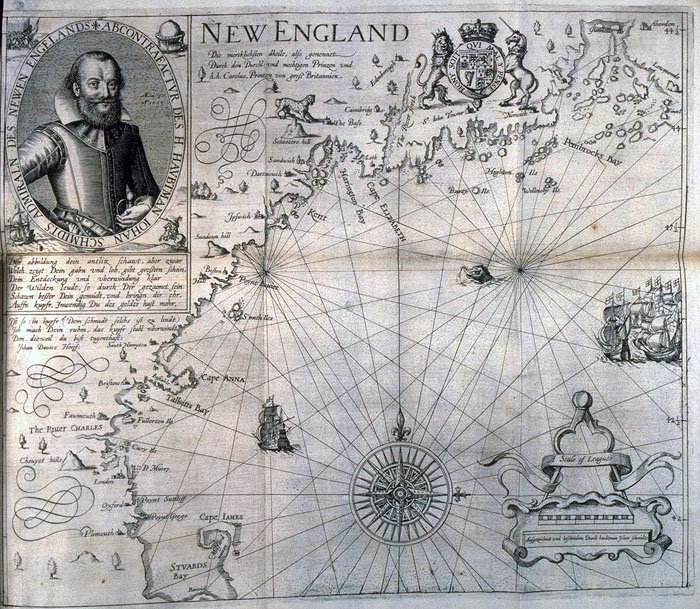
✅ VERIFIED One key reason the settlers chose Plymouth was Town Brook, whose spring-fed water gave drinking water and a run of river herring, beside already-cleared fields — they stopped for fresh water, fish and worked ground, not for a rock. Sources: See Plymouth; NSRWA; NOAA Fisheries.
III. The Wampanoag and Patuxet
This was a village called Patuxet
 Public domain
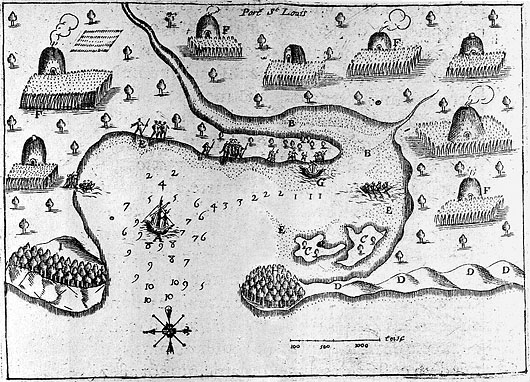
✅ VERIFIED The English colony was built on the site of an existing Wampanoag village, Patuxet; this was not empty wilderness — and the museum's 2020 renaming to Plimoth Patuxet was meant to acknowledge exactly that. Sources: Wikipedia, Patuxet; Atlas Obscura; Plimoth Patuxet Museums; Boston Globe (2020).
The Great Dying, 1616–1619
 Public domain
✅ VERIFIED Between 1616 and 1619 an epidemic swept the coastal Native communities from southern Maine to western Rhode Island, all but emptying Patuxet — which is why the settlers of 1620 found cleared fields but no people. Sources: Wikipedia, Patuxet; CDC, Emerging Infectious Diseases 16(2), 2010; American History Central.
A range, not a single number
⚠️ DISPUTED Estimates of the death toll run from one third to as high as 90%, and the CDC journal explicitly notes the lack of reliable data; reducing it to a firm "90%" is not accurate. Sources: CDC, Emerging Infectious Diseases 16(2), 2010 (Marr & Cathey).
The cause remains undetermined
⚠️ DISPUTED The pathogen is still unsettled: plague, influenza, smallpox and yellow fever have all been proposed, and a 2010 CDC-journal paper offered leptospirosis (spread by rats from European ships); none is proven, and the authors call theirs "a heuristic for others to criticize and explore." Sources: Marr JS & Cathey JT, Emerging Infectious Diseases 16(2):281–286, 2010.
Tisquantum spoke English because he was kidnapped
✅ VERIFIED By Bradford's account, in 1614 Tisquantum was seized with others by Captain Thomas Hunt to be sold as slaves in Spain; he reached England, learned English, and returned around 1619 to find Patuxet emptied by the Great Dying — its last surviving member. Sources: Plimoth Patuxet Museums (quoting Bradford); Wikipedia, Squanto; World History Encyclopedia.
"Massasoit" is a title, not a name
✅ VERIFIED "Massasoit" means "great sachem" — a title; the man's own name was Ousamequin (c. 1581–1661). English colonists mistook the title for a name, and it has stuck for four centuries. Sources: Wikipedia, Massasoit; World History Encyclopedia; Britannica.
The 1621 agreement: six clauses, none about friendship
✅ VERIFIED The 1621 agreement between Governor John Carver and Ousamequin has six clauses — no injury; hand over offenders for trial; restore property, reciprocally; mutual military defense; notify allied communities into the peace; disarm reciprocally when visiting — all executable, reciprocal security terms, with not one word about "friendship." Sources: Mourt's Relation (1622); Library of Congress, In Custodia Legis; Pilgrim Hall Museum; World History Encyclopedia.
The alliance was calculation, not affection
✅ VERIFIED The Wampanoag scholar Nanepashemet (1954–1995), a founder of Plimoth's Native program, showed that the 1621 alliance was a defensive geopolitical move by the Wampanoag — to counter the Narragansett and put English guns on their side — not a gift of "friendship"; and this calculated pact held until King Philip's War in 1675. Sources: Plimoth Patuxet Museums, YATH "Wampanoag Perspectives on the Plymouth/Pokanoket Agreement" & "Tisquantum."
The 2020 renaming
✅ VERIFIED In 2020 the museum became Plimoth Patuxet Museums, stated reasons being that "plantation" now carries strong associations with slave-labor estates, and that the new name raises the Native place-name Patuxet alongside Plimoth. Sources: Smithsonian Magazine; Wikipedia, Plimoth Patuxet; Boston Globe (2020-11-19).
Did the course change with the name?
⚠️ DISPUTED Track A (museum): the change honors Native history and culture, "central to the museum's mission." Track B (critics): a November 2020 Boston Globe column argued the name changed but the course did not; in 2022 Wampanoag figures such as Paula Peters ("They've changed the name but haven't changed the attitude") publicly urged a boycott, citing a weakened Native program — and on the public record the two sides' last statements do not meet. Sources: Plimoth Patuxet Museums 2022-09-01 statement; Boston Globe (2020-11-19); AP (2022-08-10) via GBH/WFSU/CBS Boston; Mashpee Wampanoag Tribe (2022-08-30).
Academic revision: Silverman 2019
✅ VERIFIED David J. Silverman's This Land Is Their Land (Bloomsbury, 2019) retells Plymouth from the Wampanoag point of view, challenges the "empty land" premise, and shows that tying Thanksgiving to the 1621 meal is a 20th-century construction (the holiday itself dates to Lincoln's 1863 proclamation). Sources: Bloomsbury (2019); American Historical Review 126(1); Not Even Past (UT Austin).
The revision has its own critics
⚠️ DISPUTED Wampanoag scholar Linda Coombs (Aquinnah), who worked in Plimoth's Native program for nearly thirty years, published a critical review of Silverman in Native American and Indigenous Studies (8:2, Fall 2021, pp. 158–160), reserving that he still leans on colonial records to tell a Native story — so the "revision" is not a single track, and Wampanoag voices should not be omitted again. (The review's exact wording is paywalled and not quoted here.) Sources: Linda Coombs, review in NAIS 8:2 (2021), pp. 158–160, via Project MUSE; Wikipedia, Linda Coombs.
The other track on the same hill: the National Day of Mourning
✅ VERIFIED In 1970 Massachusetts invited Wampanoag man Wamsutta (Frank) James to speak for the 350th anniversary, then withdrew the invitation on seeing his text; he gathered instead on Cole's Hill on Thanksgiving Day 1970 with about 500 Native people — the first National Day of Mourning, held every Thanksgiving since (organized by UAINE), commemorated by a town plaque placed on the hill in 1998. Sources: Mayflower400UK; Wikipedia, National Day of Mourning; Plimoth Patuxet Museums education resources; Saturday Evening Post.
Corn is an Indigenous crop
✅ VERIFIED Corn was not brought by the English: flint corn reached southeastern New England about a thousand years ago and became the Wampanoag's key staple (ewáchim-neash), grown by the "Three Sisters" method with beans and squash; the corn porridge nasaump gives English its loanword "samp." Sources: Plimoth Patuxet Museums, YATH "Nasaump" & "Growing Corn, Beans, and Squash."
Was the corn taken at Corn Hill ever repaid?
⚠️ DISPUTED In November 1620 a party under Myles Standish dug up stored Native corn (and disturbed graves) at Corn Hill on Cape Cod — recorded plainly in Mourt's Relation. Whether it was ever repaid is disputed: some accounts say there is no record of compensation, others that the settlers later offered and made it; the point is unsettled. Sources: Mourt's Relation (1622) for the event; conflicting secondary accounts on compensation.
IV. The Mill and the Colony's Economy
1636: the colony grants Jenney a mill
✅ VERIFIED In 1636 Plymouth Colony granted John Jenney (and his wife Sarah) leave to build a mill on Town Brook; Jenney had arrived in 1623 on the Little James, and the colony was more than a decade old before it had such industry. Sources: Plimoth Patuxet Museums, YATH Unit 3; Pilgrim Hall Museum, "John & Sarah Jenney"; Wikipedia, Plimoth Grist Mill.
The miller's cut was capped by statute
✅ VERIFIED The miller's toll was not his to set: a 1638 statute, carried into the 1672 Book of the General Laws, capped it at no more than one-sixteenth of the grain milled — and it was taken in grain, not cash, since in a near-coinless colony grain was money. Regulating mills as public utilities was common across the colonies (Chaucer had already mocked the thieving miller), but Plymouth's 1/16 cap was twice as strict as North Carolina's 1/8 of 1758 — and 120 years earlier. Sources: Brigham (ed.), The Compact with the Charter and Laws (1836), "Millners Tolle" (1638); Records of the Colony of New Plymouth, Vol. 11 (Laws), p. 116; Book of the General Laws (1672), "Miller and Mills"; North Carolina History encyclopedia.
The 1633 monopoly was conditional
✅ VERIFIED In 1633 the colony granted Stephen Deane an exclusive corn-beating works on one condition: it held only if he could serve the whole colony — otherwise it lapsed — and the order expressly reserved the right to build a grist mill later. Exclusivity was the reward for universal service, not a substitute for it. *Sources: Records of the Colony of New Plymouth, Vol. 1 (Court Orders), ms. p. 7 (Jan 1632/3).
Grind badly and you pay
✅ VERIFIED The same law imposed quality liability: a miller must "grind their corn sufficiently" or, on proven complaint, pay 6 pence per bushel to the wronged party and 6 pence to the colony's treasury — an early pairing of damages and administrative penalty. Sources: Brigham (1836), "Millners Tolle" (1638); Records of the Colony of New Plymouth, Vol. 11, p. 116; Book of the General Laws (1672).
A customer could demand a re-weigh
✅ VERIFIED The 1672 code required every miller to keep, at his own charge, sealed official measures (a pottle and a quart) plus scales and weights, and to re-weigh a man's corn on request (with a 10-shilling monthly fine for unsealed measures) — a written right of consumer measurement. Sources: Book of the General Laws of New-Plimouth (1672), "Miller and Mills."
The law was actually enforced — against Jenney himself
✅ VERIFIED The law had teeth: the grand jury indicted John Jenney himself — the mill's licensee and a Magistrate of the colony — for not grinding well, making men wait, and not grinding properly "unless his servant got fed first"; after his death his widow Sarah, who ran the mill, was also presented and promised the court she would amend it. Sources: Records of the Colony of New Plymouth (Court Orders / Grand Inquest presentments), Shurtleff ed.
A widow ran the colony's most regulated utility
✅ VERIFIED John Jenney died in 1643–44; his widow Sarah ran the mill until her own death (her 1666 inventory survives), her son Samuel continued, and in 1683 it was sold to Charles Stockbridge — meaning the colony's most heavily regulated utility was run for nearly twenty years by a widow. Sources: Pilgrim Hall Museum; Wikipedia, Plimoth Grist Mill; Old Schwamb Mill.
The town kept the water right — and wrote conditions in
✅ VERIFIED Ownership changed hands, but Plymouth always kept the mill privilege itself; the 1683 contract with Stockbridge required a sufficient corn mill, a competent miller, and a fish passage for herring over the dam — a single 1683 agreement binding service, staffing and ecology together. Sources: Old Schwamb Mill, "Big Wheel Keeps on Turning…" (2020); corroborating accounts of the same terms.
The fire: most likely 1847
⚠️ DISPUTED The original mill burned in a fire whose date varies by source: Old Schwamb Mill and Pilgrim Hall point to 1847, Wikipedia to "the mid-1840s" (compatible), and weaker retellings to 1837 — the weight of evidence favors 1847. Sources: Old Schwamb Mill (2020); Pilgrim Hall Museum; Wikipedia, Plimoth Grist Mill.
Today's mill is a reproduction — but it truly grinds
✅ VERIFIED The present mill is a reproduction built on the original site in 1969 and opened in 1970 (the original burned in 1847), with a 14-foot waterwheel and a pair of 54-inch stones; it is not a model but a working facility that fills real orders for cornmeal, samp and flour in support of local grain production. Sources: Plimoth Patuxet Museums, YATH Unit 3 & Grist Mill page; Wikipedia; WCAI (2019).
V. Living History and Museum Method
Founded 1947, on this site from 1959
✅ VERIFIED Archaeologist Henry Hornblower II founded the museum in 1947 as two English cottages and a fort on the Plymouth waterfront; Mayflower II arrived in 1957 and the 17th-Century English Village opened on the present Eel River site in 1959 — the museum did not "move here in 1957"; that year the ship arrived. Sources: Plimoth Patuxet Museums, About Us timeline; The Cultural Landscape Foundation; National Park Service.
Deetz and immersive living history
⚠️ DISPUTED Archaeologist James Deetz (1930–2000), from his arrival in 1959, gradually turned the museum from cases-and-labels into immersive living history — removing anachronisms, dropping labels, and introducing costumed first-person interpretation; his 1969 essay "The Reality of the Pilgrim Fathers" was its manifesto. (First-person interpretation is generally dated to the 1970s; "1969" is the essay's year, not a year of reform.) Sources: Wikipedia, James Deetz; living-history histories of first-person interpretation.
The English Village: first person, fixed at 1627
✅ VERIFIED The 17th-Century English Village is set in 1627, where interpreters portray specific, documented colonists in period speech, accent and dress, treating 1627 as the present and staying in character, with modern-dress third-person interpreters nearby to field what characters cannot answer. Sources: Plimoth Patuxet Museums, English Village page; Wikipedia, Plimoth Patuxet; Deseret News (2012).
The Patuxet Homesite: not role-play
✅ VERIFIED Native staff at the Historic Patuxet Homesite do not play 17th-century people: they speak modern English as contemporary Native museum professionals about a Wampanoag history and culture that continues today — in the museum's own words, "we are all modern people, speaking modern English. We are not playing a role." Sources: Plimoth Patuxet Museums, Historic Patuxet Homesite page & "Presenting the Story of Two Cultures"; Wikipedia, Plimoth Patuxet.
The asymmetry of the two methods is itself the point
✅ VERIFIED The Village pulls visitors into 1627 in the first person; the Homesite deliberately refuses to, presenting Native staff as present-day people — a conscious choice, because turning Native people into "living specimens" is a kind of erasure, and the Wampanoag are a people who, in the museum's present-tense words, "continue to thrive today." Sources: Plimoth Patuxet Museums, Historic Patuxet Homesite page.
Wetu and mishoon: materials and technique
✅ VERIFIED The Homesite shows the wetu (a dome-shaped Wampanoag house covered in bark or cattail reeds with fur-lined benches; plural wetuash) and the mishoon (a dugout canoe shaped by using fire as a tool) — a wetu is not a Plains tipi, and "fire as a tool" is a technical statement, not a figure of speech. Sources: Plimoth Patuxet Museums, Historic Patuxet Homesite page; Wikipedia, Plimoth Patuxet.
Building: timber frame, daub, thatch
✅ VERIFIED The Village houses are timber-framed (post-in-beam), with daub interior walls (clay, mud, sand and straw) and thatched roofs (reed or long grass, not necessarily straw), along Leyden Street, with a fort that doubles as a meetinghouse and a palisade. Sources: Boston Globe (2025-11-28, 2026-05-23); Wikipedia, Plimoth Plantation; Deseret News.
The 2024–2026 rebuild: a "thoughtful compromise"
✅ VERIFIED The Village's Alden and Winslow houses were rebuilt by hand (Alden begun in autumn 2024, interpreters moved in by May 2026), keeping 17th-century timber frame, daub and thatch but setting each load-bearing post on a prefabricated concrete footing to weather the rain and last longer — 1627 above ground, modern technique below: the core promise kept, the means modernized. Sources: Boston Globe (2025-11-28 "Reviving history"; 2026-05-23 "Pilgrim interpreters move into newly completed replica home").
A 17th-century museum forced to adapt by 21st-century climate
✅ VERIFIED One driver of the rebuild is climate: Executive Director Tom Begley told the Boston Globe, "Every rain we get nowadays is a downpour… it was leading to serious erosion on the hill," adding, "We're learning by doing and that's what makes living history so exciting and different" — knowledge won by building it again, experimental archaeology. Sources: Boston Globe (2025-11-28), quoting Tom Begley, Executive Director, Plimoth Patuxet Museums.
The director edited Bradford's manuscript
✅ VERIFIED Executive Director Tom Begley edited the first facsimile edition since 1906 of William Bradford's Of Plimoth Plantation — the very manuscript that carries the only complete surviving text of the Mayflower Compact — so the institution has a first-hand scholarly stake in the founding covenant's original text. Sources: Plimoth Patuxet Museums, "Mayflower Experts" page.
The 2026 theme: the origins of self-governance
✅ VERIFIED Plimoth Patuxet's 2026 framework, "Revolutionary Ideas Started Here," centers diverse perspectives, layered histories, self-governance and civic identity; Executive Director Tom Begley states in the official release that deepening this beginning yields insight into "the origins of self-governance, civic identity, and the enduring American Experiment" — in the year of the nation's 250th anniversary. Sources: Plimoth Patuxet Museums press release, "Launches 2026 Season with… Revolutionary Ideas Started Here," quoting Tom Begley.
On sources. Every quotation here is a verifiable public statement with its source named; where primary text could not be checked word for word, it is not quoted directly. Gaps in the record are normal — marking them, rather than papering over them, is why this page exists.
More Primary Sources in Image
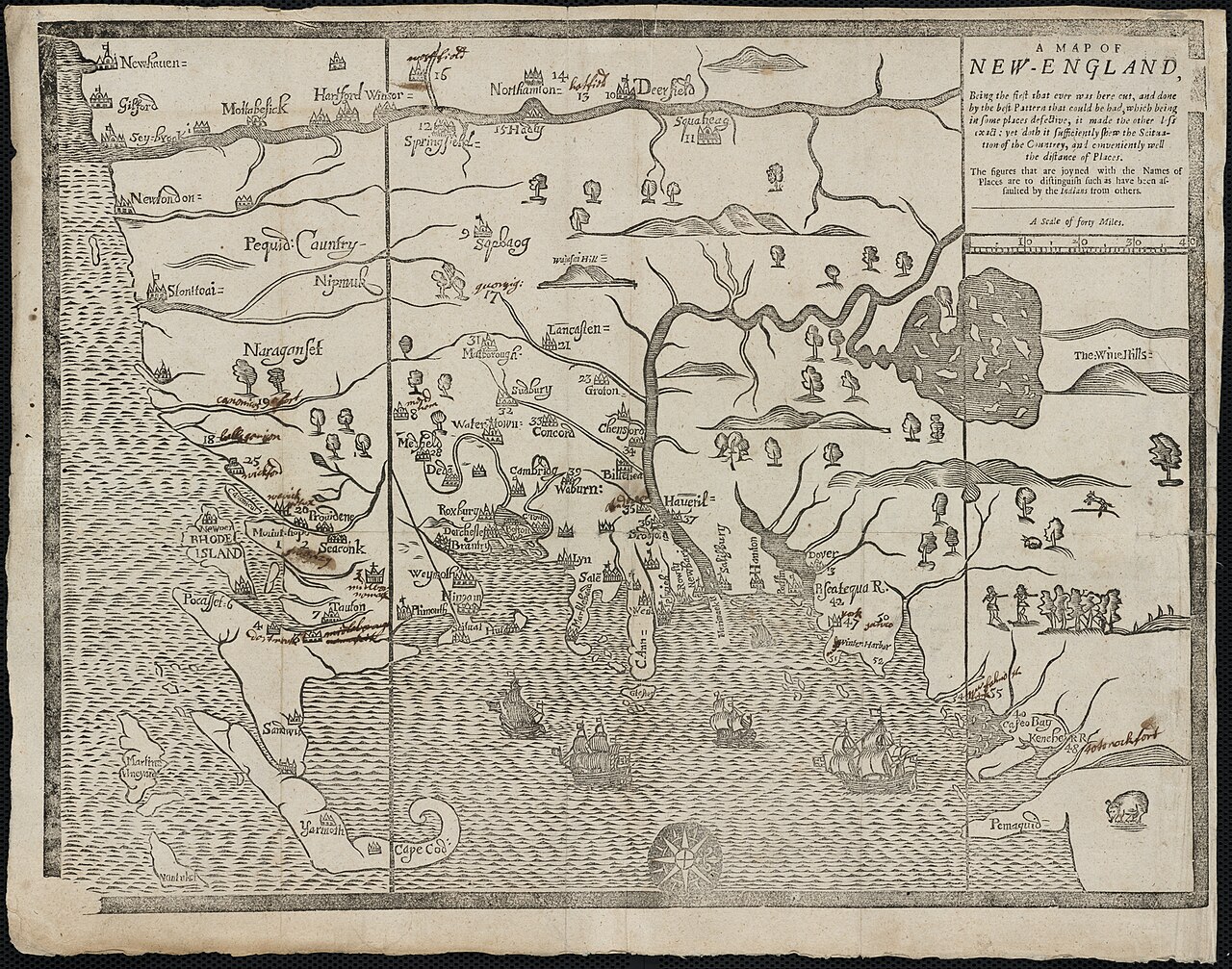
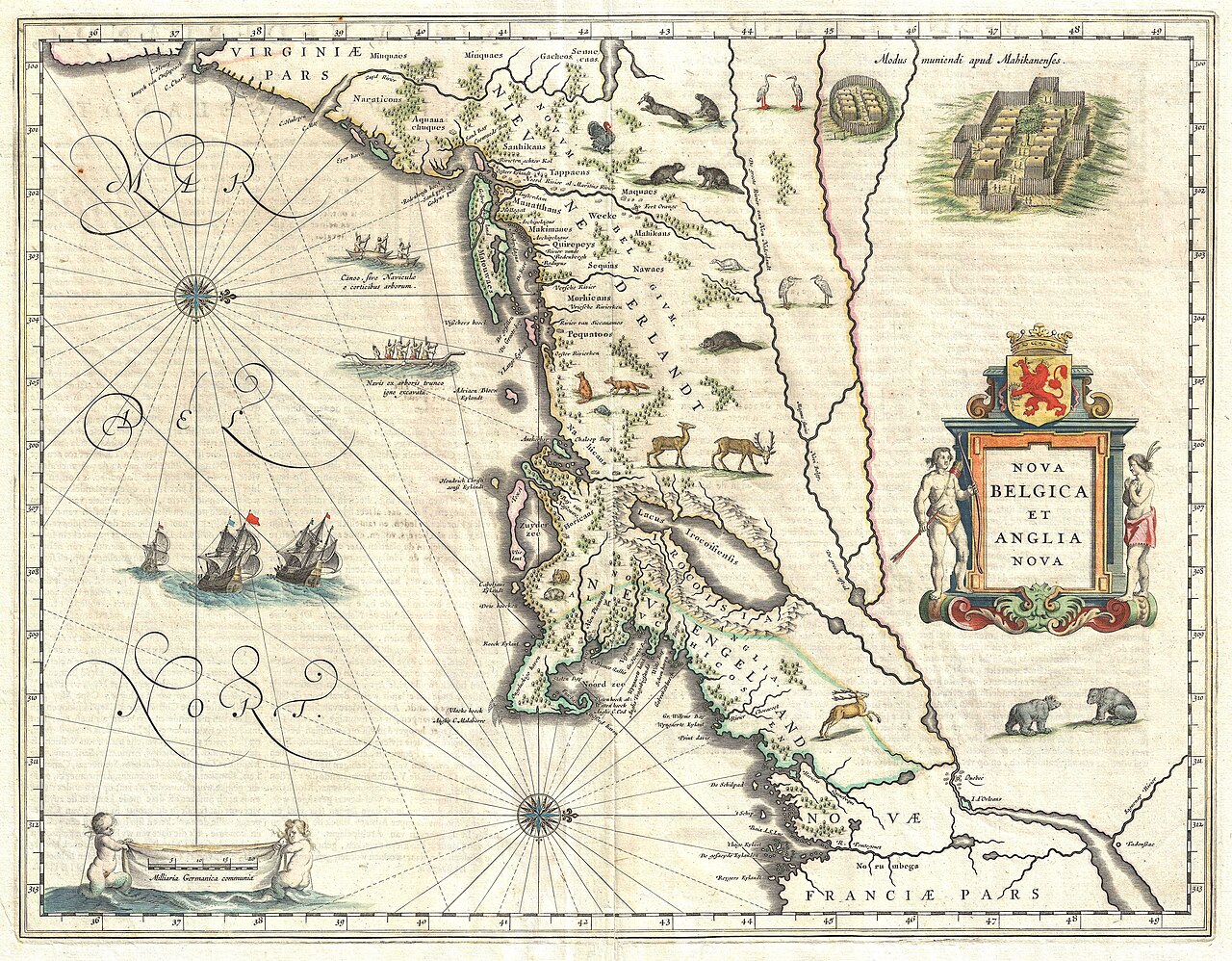
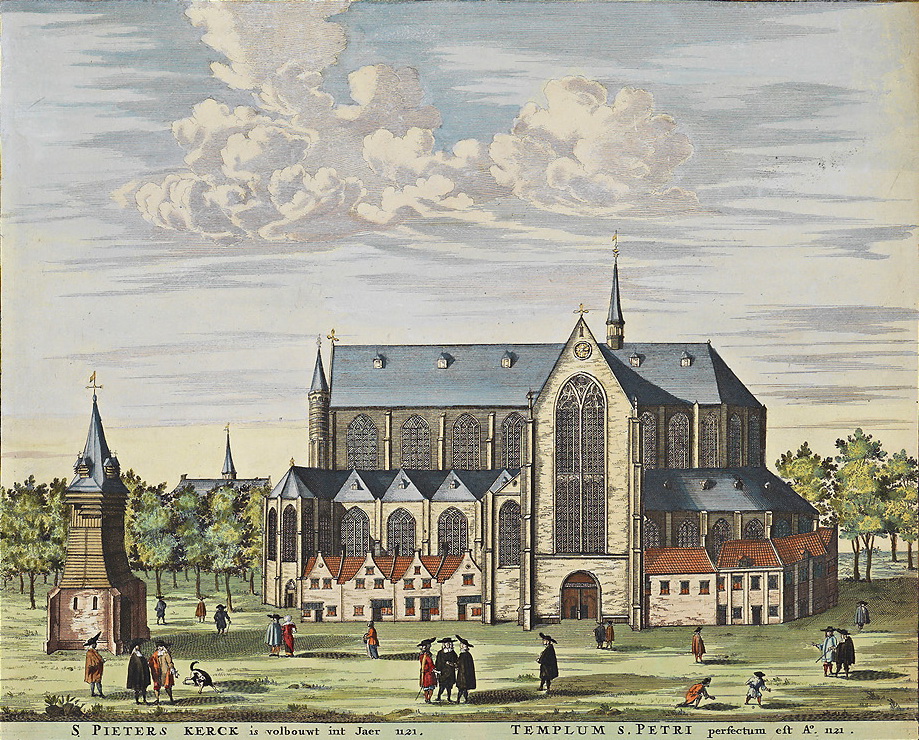
Portraits, maps and engravings — public-domain originals, each with its source and licence.
 Public domain
 Public domain
 Public domain
 Public domain
 Public domain